Showing posts with label Florida. Show all posts

Sunday, May 31, 2009

Miami Cult Member Selling Ruhama Canellis Dot Com

Someone has registered the domain name ruhamacanellis.com and is offering it for sale. The contact email address listed on the site belongs to a high ranking member of a Miami based religious cult that has been openly going after Alberto Cutie and the Roman Catholic Church for years.

by Gilbert Wesley Purdy.


On May 8th ― the day that Ruhama Buni Canellis was identified by the UPI as the love interest in the life of Roman Catholic priest Father Alberto Cutie ― the domain name ruhamacanellis.com was registered through the internet provider GoDaddy.com. The domain was purchased under a program GoDaddy offers to maintain a domain owner’s anonymity. The listing for ruhamacanellis.com at GoDaddy’s WhoIs search page reads the following in lieu of the registrant’s name:
Registrant:
This domain is for sale
Miami City
Miami, Florida 33015
United States
A gmail contact address (twittersdomain@gmail.com) is provided. The address does not have a searchable internet history.


At the site itself, however, (just below a picture of the cover of a tabloid newspaper featuring photos of then Father Alberto Cutie involved in love play on the beach with Ruhama) the contact email address provided for those who might be interested in advertising on the site is alvaro@aposmail.com. The site is laid out on a Google Blogspot template, features Google Adsense and advertising from unspecified sources and is called simply “Ruhama Canellis”. The articles and links portray Alberto Cutie and Roman Catholicism in the most unflattering possible fashion.

Alvaro@aposmail.com, as it turns out, is a very interesting email address. It is one of the many email addresses of Alvaro Albarracin, a close associate of Miami Cult leader Jose Luis De Jesus Miranda. De Jesus Miranda is the head and founder of the Creciendo En Gracias (Growing in Grace) church. The web site features links to a number of De Jesus Miranda’s and the church’s web sites including a site called “VaticanCrimes.US”. One unsigned post, dated May 28, 2009, reads “Father Cutie Will Marry Me Today, Thursday!”


De Jesus Miranda has declared himself both the second coming of Christ and the first coming of the Antichrist. In his theology both are the same person. In the words of Dan Matthewson, associate professor of religion at Wofford College:

In addition to its Latin American churches, the movement has also spread into the U.S., Spain, Italy, Canada, and Australia, with headquarters in Miami, Florida. Total, the group claims 300 congregations with more than 100,000 members, in addition to a 24-hour cable channel based in Columbia that purportedly reaches two million homes. Telegracia, as the channel is called, airs talk shows, music videos, and sermons in English, Spanish and Portuguese. It also broadcasts a news program, which is taped in the Miami headquarters.
De Jesus Miranda preaches that the Roman Catholic Church is evil and that there is no such thing as sin. (Actually, if pressed he adds that he finds all Christian denominations pretty much equally evil.) He has taken the number 666 and the letters SSS (which he claims stands for “Salve Siempre Salve,” but, of course, just might stand for “Six Six Six”) as corporate symbols of a sort. They appear on his backdrops, his pulpits and elsewhere. His followers often sport 666 tattoos.

According to a February 2007 Fox News article, Alvaro Albarracin, whose email address appears on ruhamacanellis.com, “oversees corporate donations to the church and holds the title 'Entrepreneur of Entrepreneurs.'” Albarracin has many business interests himself and among them is buying internet domains for resale. This might seem to explain his interest in the ruhamacanellis.com domain but there is much more to the story.

It seems that Alberto Cutie and De Jesus Miranda had a heated exchange of words in early 2005. Cutie had begun preaching that De Jesus Miranda was “ignorant,” “crazy,” “schizophrenic”. The founder of Creciendo En Gracia did not take the comments well and began counter attacking Cutie on his television station Telegracia. In December of 2006, well after the war of words had ended, De Jesus Miranda suddenly brought Cutie up again. The priest, he said, was going to fall due to a scandal.

Those who have been following the Alberto Cutie stories, since he was discovered on a Miami beach in love play with a then unidentified woman, will remember that Cutie admits that he has had an intimate relationship with Ruhama Canellis for “about two years”. That would mean that the relationship began at about the same time that Jose Luis De Jesus Miranda predicted that he was going to be the subject of a scandal. The cult leader is presently circulating a video claiming that he “prophesied” Alberto Cutie’s fall. A copy has been uploaded to YouTube by Creciendo En Gracias.

While Alvaro Albarracin is a notoriously fast operator, he does not seem the type to try to sell an internet domain that seems certain to be the subject of a lawsuit against whoever might buy it ― a lawsuit that would seem just as certain to succeed. And then there is the question of just who he might be selling it for. If he himself owns the site why pay a fee to mask the fact and then list his own personal email address on the site? If he is selling it for someone else then who is he selling it for? The answer to that question might be the answer to many of the mysteries surrounding the Alberto Cutie scandal.

Saturday, August 02, 2008

American Life in Poetry #159: Allan Peterson.

BY TED KOOSER, U.S. POET LAUREATE, 2004-2006

Bad news all too often arrives with a ringing telephone, all too early in the morning. But sometimes it comes with less emphasis, by regular mail. Here Allan Peterson of Florida gets at the feelings of receiving bad news by letter, not by directly stating how he feels but by suddenly noticing the world that surrounds the moment when that news arrives.


The Inevitable

To have that letter arrive
was like the mist that took a meadow
and revealed hundreds
of small webs once invisible
The inevitable often
stands by plainly but unnoticed
till it hands you a letter
that says death and you notice
the weed field had been
readying its many damp handkerchiefs
all along


American Life in Poetry is made possible by The Poetry Foundation (www.poetryfoundation.org), publisher of Poetry magazine. It is also supported by the Department of English at the University of Nebraska-Lincoln. Poem copyright (c) 2007 by Allan Peterson, whose most recent book of poetry is "All the Lavish in Common," U. of Mass. Pr., 2005, winner of the Juniper Prize. Reprinted from "The Chattahoochee Review," Winter 2007, V. 27, no. 2, by permission of the author. Introduction copyright (c) 2008 by The Poetry Foundation. The introduction's author, Ted Kooser, served as United States Poet Laureate Consultant in Poetry to the Library of Congress from 2004-2006. We do not accept unsolicited manuscripts.


Also at Virtual Grub Street by/about Ted Kooser:

Saturday, March 18, 2006

Lanier On The Runaway Slaves at Fort Gadsden.

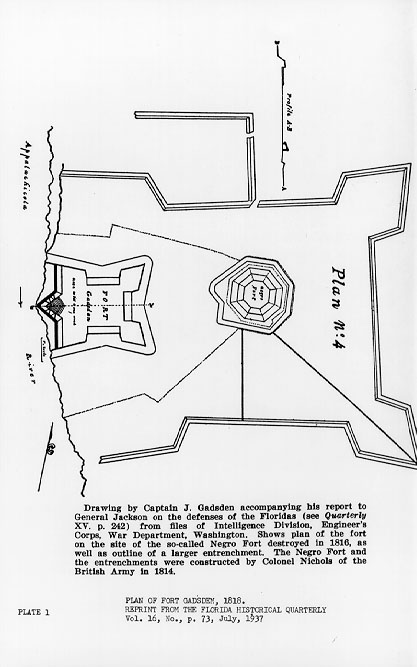
In 1875, the consumptive poet Sidney Lanier agreed to do a guidebook on Florida, for Lippincott & Co., for $125 per month, travel expenses and the benefit he hoped the excursion would give to his health. Lanier's descriptions of the state and its history are concise and informative however much they are tainted with the bigotry of the times. Here he describes the history of a fascinating fort commandeered by runaway slaves.


Florida could not have been a pleasant place of residence in these days. Some account of a singular fort which existed for several years on the Apalachicola River may illustrate the state of affairs at this time. During the war of 1812 between Great Britain and the United States, General Jackson moved down upon Pensacola and captured it by storm. Thereupon its former commander, Colonel Nichols, who had gotten away by water, proceeded with some British troops and friendly Indians up the Apalachicola River and caused a fort to be constructed on a bluff of that stream at the point now known as Fort Gadsden, in which was placed a garrison of British troops and Creek Indians. This fort was intended to be used as a rendezvous and base of operations for the runaway negroes, from which they might depredate upon the neighboring border. The war of 1812 having closed, the British troops left the fort; but a negro named Garcia retained possession of it, the runaways under his lead garrisoned it, and it became a really strong point of defense to that large colony of runaway outlaws who had settled upon the banks of the Apalachicola. The walls of the fort were fifteen feet in height and eighteen in breadth; it had a swamp behind, and creeks above and below it; it was armed with nine cannon and three thousand small arms, and had amply stored magazines. This fort existed until 1816 when Colonel Clinch of the United States army reduced it, after a set battle with the negro garrison which opened 


hotly enough and would have doubtless been a troublesome piece of work for the whites had not a lucky hot shot from one of the United States gunboats exploded a magazine in the fort, causing great slaughter and demoralization among those inside. Garcia, and a Choctaw chief who was aiding and abetting him, were executed after the capture; and property amounting to two hundred thousand dollars in value is said to have been recovered in the fort.


Florida: its Scenery, Climate, and History by Sidney Lanier. Philadelphia: J. B. Lippincott & Co., 1876. (Baltimore: Johns Hopkins Press, 1945. 133-34. The JHP edition is a reprint of the second edition text with only page numbers altered.)


    Also from the Library of Babel:


    • Pierce Butler, Fanny Kemble, et al.  July 22, 2020.  ‘“An attempt of the Pennsylvania Supreme Court to make a way around the original Fugitive Slave Law, of 1793, by finding a private agent guilty of kidnapping for having remanded a slave from Pennsylvania to Maryland was forcefully overturned by the U. S. Supreme Court in Prigg v. United States (1842).”’
    • The Best Translation of Dante’s Divina Commedia.  July, 14, 2019.  “For the next month, then, I put aside a few hours each night.  Not only with Singleton and Merwin.  In the glorious Age of the Internet, the first step could only be a search for what books relating to the subject were available on Google Book Search and the Internet Archive.”
    • A Memoriam for W. S. Merwin.  April 17, 2019.  “It took about three days, as I recall, for me to surrender to the fact that W. S. Merwin was the finest English language poet of his time.  I wished I’d been prepared to read him years ago.”
    • Be sure to check out the Browser's Guide to the Library of Babel.

Sidney Lanier on the Fate of the Seminoles.

The consumptive poet Sidney Lanier agreed to do a guidebook on Florida, for Lippincott & Co., for $125 per month, travel expenses and the benefit he hoped the excursion would give to his health. The trip began in the spring of 1875 and the first edition of the book appeared late in the same year. The guidebook provides a solid description of the state at that time. Here he deals rather perfunctorily with the fate of the Seminole Indians.


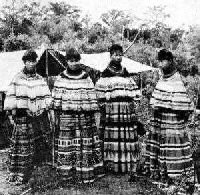
The Everglades run through a large portion of Dade County and a part of Monroe. To the westward, in the space inclosed between the Everglades and the Gulf Coast, in Monroe County, dwell the remnant of the Indians who for so many years defied Spaniard, Frenchman, Englishman, and American, in this bloody Florida. In the year 1842, at the close of his remarkable campaign against the Florida Indians, General Worth announced to the Government that there remained but about three hundred of them -- men, women, and children -- and suggested that these be allowed to stay, without further pursuit, within specified limits -- being the space inclosed between Pease Creek, from its mouth along the southern fork of it, to Lake Istokpoga; thence down along that lake, the Kissimmee River, Lake Okeechobee, and the Everglades to the Gulf Coast; thence along the coast back to the starting point. This suggestion was finally acceded to, and with the exception of two insignificant disturbances quickly suppressed by State troops they have peacefully remained in their allotted territory, living mostly upon fish and game. They are said to retain their customs, and I met one resident of Florida who knew their old chief Tiger-tail, and had received an invitation to their Green-Corn Dance, then about to be held. Their number is now estimated to be about three hundred in all. They are seen by few whites, save the "cow-boys," and those dwelling in the lower portions of Orange County, and in Polk, Brevard, Manatee, and Dade.


Florida: its Scenery, Climate, and History by Sidney Lanier. Philadelphia: J. B. Lippincott & Co., 1876. (Baltimore: Johns Hopkins Press, 1945. 96-7. The JHP edition is a reprint of the second edition text with only page numbers altered.).


Also from the Library of Babel:

  • Pierce Butler, Fanny Kemble, et al.  July 22, 2020.  ‘“An attempt of the Pennsylvania Supreme Court to make a way around the original Fugitive Slave Law, of 1793, by finding a private agent guilty of kidnapping for having remanded a slave from Pennsylvania to Maryland was forcefully overturned by the U. S. Supreme Court in Prigg v. United States (1842).”’
  • The Best Translation of Dante’s Divina Commedia.  July, 14, 2019.  “For the next month, then, I put aside a few hours each night.  Not only with Singleton and Merwin.  In the glorious Age of the Internet, the first step could only be a search for what books relating to the subject were available on Google Book Search and the Internet Archive.”
  • A Memoriam for W. S. Merwin.  April 17, 2019.  “It took about three days, as I recall, for me to surrender to the fact that W. S. Merwin was the finest English language poet of his time.  I wished I’d been prepared to read him years ago.”
  • Be sure to check out the Browser's Guide to the Library of Babel.


Thursday, September 29, 2005

Bartram Seeks News of the Creeks and Seminoles

About to ascend the St. John's River, in April of 1774, Wiliam Bartram seeks information about a recent incident between the local settlers and Indians. Should the incident remain unresolved, he could all too easily find himself in hostile territory.

At night I ran in shore, at a convenient harbour, where I was received and welcomed by the gentleman, who was agent for the plantation, and at whose pleasant habitation near the harbour, I took up my quarters for the night.

This very civil man happened to be a person with whom I had formerly been acquainted in St. Augustine; and as he lived about twenty miles distant from it, I had good reason to expect that he would be a proper person to obtain intelligence from concerning the disturbances which were thought still to subsist between the Lower Creeks and the white inhabitants of East Florida. Upon enquiry, and conversation with him, I found my conjectures on that head to have been well founded. My friend informed me, that there had, but a few days since, been a council held at St. Augustine, between the governor of East Florida and the chiefs of the Lower Creeks. They had been delegated by their towns, to make inquiry concerning the late alarm and depredations committed by the Indians upon the traders; which the nation being apprised of, recommended these deputies to be chosen and sent; as soon as possible, in order to make reasonable concessions, before the flame, already kindled, should spread into a general war. The parties accordingly met in St. Augustine, and the affair was amicably adjusted to the satisfaction of both parties. The chiefs of the delinquent bands, whose young warriors had committed the mischief, promised to indemnify the traders for the loss of their goods, and requested that they might return to their storehouses, with goods as usual, and that they should be safe in their persons and property. The traders at this time were actually preparing to return. It appeared, upon strict investigation of facts, that the affair had taken its rise from the licentious conduct of a few vagrant young hunters of the Siminole [Seminole] nation, who, imagining themselves to have been ill treated in their dealings with the traders (which by the bye was likely enough to be true) took this violent method of doing themselves justice. The culprits, however, endeavoured to exculpate themselves, by asserting, that they had no design or intention of robbing the traders of their effects, but meant it only as a threat; and that the traders, from a consciousness of their dishonesty, had been terrified and fled, leaving their stores, which they took possession of, to prevent their being totally lost. This troublesome affair being adjusted, was very agreeable news to me, as I could now, without apprehensions, ascend this grand river, and visit its delightful shores, where and when I pleased.


Travels of William Bartram Through North & South Carolina, Georgia, East & West Florida, The Cherokee Country, the Extensive Territories of the Musogulges, or Creek Confederacy, and the Country of the Chactaws; Containing an Account of the Soil and Natural Productions of Those Regions, Together with Observations on the Manners of the Indians. Philadelphia: James & Johnson, 1791. (Dover Reprint, 1955.) 86-87.


Related items:


Monday, September 19, 2005

Bartram on the Live Oak and Florida Forest

William Bartram explores the St. John's River, just south of St. Augustine, Florida, in April of 1774. Here he gives us a description of the trees of the north Florida forest, especially the Live Oak (Quercus virginiana):

The Live Oaks are of an astonishing magnitude, and one tree contains a prodigious quantity of timber; yet comparatively, they are not tall, even in these forests, where growing on strong land, in company with others of great altitude (such as Fagus sylvatica, Liquidambar, Magnolia grandiflora, and the high Palm tree) they strive while young to be upon an equality with their neighbours, and to enjoy the influence of sun-beams, and of the pure animating air. But the others at last prevail, and their proud heads are seen at a great distance, towering far above the rest of the forest, which consists chiefly of this species of oak, Fraxinus Ulmus, Acer rubrum, Laurus Borbonia, Quercus dentata, Ilex aquafolium, olea Americana, Morus, Gleditsia triacanthus, and, I believe, a species of Sapindus. But the latter spreads abroad his brawny arms, to a great distance. The trunk of the Live Oak is generally from twelve to eighteen feet in girth, and rises ten or twelve feet erect from the earth, some i have seen eighteen or twenty; then divides itself into three, four, or five great limbs, which continue to grow in nearly an horizontal direction, each limb forming a gentle curve, or arch, from its base to its extremity. I have stepped above fifty paces, on a straight line, from the trunk of one of these trees, to the extremity of the limbs. It is evergreen, and the wood almost incorruptible, even in the open air. It bears a prodigious quantity of fruit; the acorn is small, but sweet and agreeable to the taste when roasted, and is food for almost all animals. The Indians obtain from it a sweet oil, which they use in the cooking of hommony, rice, etc.; and they also roast it in hot embers, eating it as we do chesnuts.


Travels of William Bartram Through North & South Carolina, Georgia, East & West Florida, The Cherokee Country, the Extensive Territories of the Musogulges, or Creek Confederacy, and the Country of the Chactaws; Containing an Account of the Soil and Natural Productions of Those Regions, Together with Observations on the Manners of the Indians. Philadelphia: James & Johnson, 1791. (Dover Reprint, 1955.) 89-90.


Also from the Library of Babel:


Audubon Observes Florida Sea-Turtles

During an 1832 trip to Florida and the Tortugas, the naturalist James Audubon had the opportunity to study the region's large Turtles: the Green (Chelonia mydas), the Hawk-billed (Eretmochelys imbricata), the Logger-head (Caretta caretta) and the Trunk [Leatherback] (Dermochelys coriacea), Turtles. The following is an excerpt, on their nesting behavior, from his observations:


But the Tortugas are not the only breeding places of the Turtles; these animals, on the contrary, frequent many other Keys, as well, as various parts of the coast of the mainland. There are four different species which are known by the names of the Green Turtle, the Hawk-billed Turtle, the Logger-head Turtle and the Trunk Turtle. The first is considered the best as an article of food, in which capacity it is well known to most epicures. It approaches the shores, and enters the bays, inlets, and rivers, early in the month of April, after having spent the winter in the deep waters. It deposits its eggs in convenient places, at two different times in May, and once again in June. The first deposit is the largest, and the last the least, the total quantity being, at an average, about two hundred and forty. The Hawk-billed Turtle, whose shell is so valuable as an article of commerce, being used for various purposes in the arts, is the next with respect to the quality of its flesh. It resorts to the outer Keys only, where it deposits its eggs in two sets, first in July, and again in August, although it "crawls" the beaches of these Keys much earlier in the season, as if to look for a safe place. The average number of its eggs is about three hundred. The Logger-head visits the Tortugas in April, and lays from that period until late in June three sets of eggs, each set averaging one hundred and seventy. The Trunk turtle, which is sometimes of an enormous size, and which has a pouch like a Pelican, reaches the shores latest. The shell and flesh are so soft that one may push his finger into them, almost as into a lump of butter. This species is therefore considered the least valuable, and, indeed, is seldom eaten, unless by the Indians, who, ever alert when the Turtle season commences, first carry off the eggs, and afterwards catch the Turtles themselves. The average number of eggs which it lays in the season, in two sets, may be three hundred and fifty.

The Logger-head and the Trunk Turtles are the least cautious in choosing the places in which to deposit their eggs, whereas the other two species select the wildest and most secluded spots. The Green Turtle resorts either to the shores of the Main, between Cape Sable and Cape Florida, or enters Indian, Halifax, and other large rivers or inlets, from which it makes its retreat as speedily as possible, and betakes itself to the open sea. Great numbers, however, are killed by the turtlers and Indians, as well as by various species of carnivorous animals, as Cougars, Lynxes, Bears, and Wolves. The Hawk-bill, which is still more wary, and is always the most difficult to surprise, keeps to the sea-islands. All the species employ nearly the same method in depositing their eggs in the sand, and as I have several times observed them in the act, I am enabled to present you with a circumstantial account of it.

On first nearing the shores, and mostly on fine, calm, moonlight nights, the Turtle raises her head above the water, being still distant thirty or forty yards from the beach, looks around her, and attentively examines the objects on the shore. Should she observe nothing likely to disturb her intended operations, she admits a loud hissing sound, by which such of her enemies as are unaccustomed to it are startled, and so are apt to remove to another place, although unseen by her. Should she hear any noise, or perceive any indications of danger, she instantly sinks, and goes off to a considerable distance; but should everything be quiet, she advances slowly towards the beach, crawls over it, her head raised to the full stretch of her neck, and when she has reached a place fitted for her purpose, she gazes all round in silence. Finding "all well" she proceeds to form a hole in the sand, which she effects by removing it from under her body with her hind flippers, scooping it out with so much dexterity that the sides seldom if ever fall in. The sand is raised alternately with each flipper, as with a large ladle, until it has accumulated behind her, when, supporting herself with her head and fore part on the ground fronting her body, she, with a spring from each flipper, sends sand around her, scattering it to the distance of several feet. In this manner the hole is dug to the depth of eighteen inches, or sometimes more than two feet. This labor I have seen performed in the short period of nine minutes. The eggs are then dropped one by one, and disposed in regular layers, to the number of a hundred and fifty, or sometimes two hundred. The whole time spent in this part of the operation may be about twenty minutes. She now scrapes the loose sand back over the eggs, and so levels and smooths the surface that few persons on seeing the spot could imagine anything had been done to it. This accomplished to her mind, she retreats to the water with all possible dispatch, leaving the hatching of the eggs to the heat of the sand. When a Turtle, a Logger-head for example, is in the act of dropping her eggs, she will not move, although one should go up to her, or even seat himself on her back, for it seems that at this moment she finds it necessary to proceed at all events, and is unable to intermit her labor. The moment it is finished, however, off she starts; nor would it then be possible for one, unless he were as strong as Hercules, to turn her over and secure her.


Audubon and His Journals ed. Maria R. Audubon. New York: Scribner's Sons, 1897. (Dover Reprint, 1960.) II, 373-75.


Also See:

Sunday, September 18, 2005

Bartram Wakes to the Call of the Wild Turkey.

William Bartram explores the St. John's River, just south of St. Augustine, Florida, in April of 1774. Here he gives us an account of waking one morning to the call of the wild turkey:

Having rested very well during the night, I was awakened in the morning early, by the cheering converse of the wild turkey cocks (Meleagris occidentalis) [now generally designated Meleagris gallopavo] saluting each other, from the sun-brightened tops of the lofty Cupressus disticha and Magnolia grandiflora. They begin at early dawn, and continue till sun-rise, from March to the last of April. The high forests ring with the noise, like the crowing of the domestic cock, of these social sentinels; the watchword being caught and repeated, from one to another, for hundreds of miles around; insomuch that the whole country is for an hour or more in an universal shout. A little after sun-rise, their crowing gradually ceases, they quit their high lodging-places, and alight on the earth, where expanding their silver bordered train, they strut and dance round about the coy female, while the deep forests to tremble with their shrill noise.


Travels of William Bartram Through North & South Carolina, Georgia, East & West Florida, The Cherokee Country, the Extensive Territories of the Musogulges, or Creek Confederacy, and the Country of the Chactaws; Containing an Account of the Soil and Natural Productions of Those Regions, Together with Observations on the Manners of the Indians. Philadelphia: James & Johnson, 1791. (Dover Reprint, 1955.) 89-90.


Also from the Library of Babel:

  • Pierce Butler, Fanny Kemble, et al.  July 22, 2020.  ‘“An attempt of the Pennsylvania Supreme Court to make a way around the original Fugitive Slave Law, of 1793, by finding a private agent guilty of kidnapping for having remanded a slave from Pennsylvania to Maryland was forcefully overturned by the U. S. Supreme Court in Prigg v. United States (1842).”’
  • Bartram on the Live Oak and Florida Forest. William Bartram explores the St. John's River, just south of St. Augustine, Florida, in April of 1774. Here he gives us a description of the trees...
  • Bartram Seeks News of the Creeks and Seminoles. About to ascend the St. John's River, in April of 1774, Wiliam Bartram seeks information about a recent incident between the local settlers and Indians.
  • Audubon Observes Florida Sea-Turtles. During an 1832 trip to Florida and the Tortugas, the naturalist James Audubon had the opportunity to study the region's large Turtles...
  • Be sure to check out the Browser's Guide to the Library of Babel.


Saturday, July 02, 2005

Regularly Scheduled Events.

The following is a calendar of regularly scheduled events along the Treasure Coast. They are, however, subject to change without notice. It is advisable to call to verify the details whenever possible.


Monday

Poetry Reading. Boynton Beach Barnes & Noble Bookstore 333 N. Congress Ave., Boynton Beach. FIRST MONDAYS. 7:00 PM. Open to the public. Original work only. No charge. Contact: John Palozzi (561) 588-9829 Renai Collins (561) 374-5986.

Tuesday

Poetry Slam at Dada: Every Tuesday night at 10 PM. Dada, 52 North Swinton Ave., Delray Beach, 561-330-3232. E-mail Casandra at hypertextual@yahoo.com.

Poetry Workshop. Borders Books in Boynton Beach 525 North Congress Ave., Boynton Beach. THIRD TUESDAYS. 7:00 PM. Open to the public. Original work only. No charge. Bring at least 10 copies of your poem. Contact: John Palozzi (561) 588 - 9829


Wednesday

Poetry Reading. Wellington Barnes & Noble Bookstore—441 & Forest Hill Blvd., at the Wellington Greens Mall. FIRST WEDNESDAYS. 7:00 PM. Open to the public. Original work only. No charge. Contact: Charles Scheitler 561-833-2981. Donna Barlett 561-798-5592.

Poetry Workshop. Borders Books at the Palm Beach Mall—1801 Palm Beach Lakes Blvd., West Palm Beach. SECOND WEDNESDAYS. 7:00 PM. Open to the public. Original work only. No charge. Bring at least 10 copies of your poem. Contact: Charles Scheitler 561-833-2981.

Poetry Reading. Borders Books in Boca Raton—Glades Rd. at Route 441, West Boca Raton. FOURTH WEDNESDAYS. 7:30 PM. Open to the public. Original work only. No charge. Contact: Rosa Lea Addington 561-482-3208.


Thursday

Clematis by Night. West Palm Beach. EVERY FRIDAY EVENING, from 5:30-9:00 PM, along Clematis Street. Live music at the Fountain (Fountain Concert Series), art, food.

Readings by Candlelyght. Fyrplace Gallery. 131 North M Street, Lake Worth, Florida 33460. The SECOND AND FOURTH THURSDAYS of Each Month from 8-10 pm, join Palm Beach County authors, actors, and others for readings and recitations of poetry, fiction, non-fiction, etc. (listeners are welcome as well). Readings by Candlelyght is held on the front lawn of the gallery, weather permitting. In the event of rain or cold, the readings are held inside the gallery. Readers are asked to keep selections to a maximum of ten minutes; generally readers are selected in the order of arrival. For more information call (561) 585-2772 or email fyrplaceLW@aol.com


Friday

Evening on the Avenues. Lake Worth. FIRST AND THIRD FRIDAY EVENINGS of the month along downtown streets. Live music on the Cultural Plaza's Mainstage, outdoor dining, arts and crafts, and the many specialty boutiques and galleries.

Bonfires on the Beach. Lake Worth. SECOND AND FOURTH FIRDAY EVENINGS of each month, from November through February at Lake Worth beach. This event features music, marshmallows and lots of fun.


Saturday

Poetry Reading. SW County Boca Raton Library -- 20701 95th Ave. So., Boca Raton. SECOND SATURDAYS: 2:00 PM. Open to the public. Original work only. No charge. Contact: Rosa Lea Addington 561-482-3208.


Sunday

Poetry Reading. The Lake Worth Shuffleboard Court, 1121 Lucerne Ave., Lake Worth. Between Lake and Lucerne Avenues and F Street and the Railroad Tracks. THIRD SUNDAYS. 2:00 PM. Doors open at 1:30 PM. Contest with cash prizes. Open to the public. Original work only. Donation: $2 for members and their guests, $3 for nonmembers. Free for high school students. Contact: Poetry Info Line 561-439 -4044.